


Samuel Becker
Assistant Professor
Email: samuel.becker@stonybrookmedicine.edu
Phone: (631) 638-2374
Address: HSC T-15, Suite 060, Office E
101 Nicolls Road
Stony Brook, NY 11794
Lab Website: www.thebeckerlab.com
The Becker Lab studies CD4+ T cells and the innate immune or non-immune cells they interact with. We focus on immunity to Mycobacterium tuberculosis and have recently begun work on tickborne rickettsial pathogens. Our lab merges expertise in cellular immunology and advanced microbial genetics. We are pursuing the following research projects.
Cognate CD4+ T cell help to macrophages.
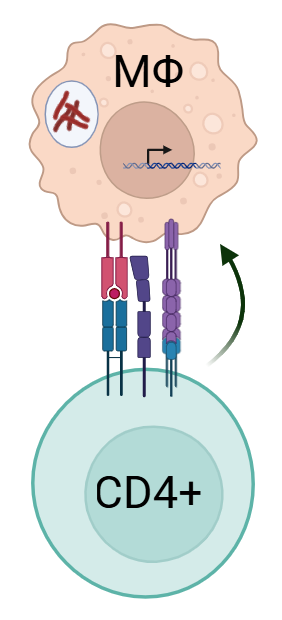
CD4+ T cells are well known to provide cognate help to B cells and dendritic cells in the form of interactions between the T cell receptor and peptide:major histocompatibility complex II (MHCII) complexes. This and subsequent interactions induce phenotypic changes in the antigen-presenting cell that elicit robust antibody-mediated immunity or dendritic cell activation. We recently showed that macrophages appear to undergo cognate CD4+ T cell help as well. This activity is critical for the ability of CD4+ T cells to protect mice from tuberculosis (Becker et al 2025) and may also be a mechanism of anti-tumor immunity (Patterson et al 2023) or other responses in which macrophages play a key role. We are defining the molecular signals in T cells and macrophages that underlie this important interaction.

M. tuberculosis susceptibility and resistance to T cell-mediated immunity.
The molecular basis for CD4+ T cell-mediated immunity to tuberculosis remains poorly understood. Our lab is using microbial genetics as a tool to close this knowledge gap. We are defining the M. tuberculosis genes that make the bacteria vulnerable to CD4+ T cell activities, or that allow the bacteria to survive in the face of this immune pressure. Beyond revealing novel immune mechanisms, these studies should point to new therapeutic targets for human tuberculosis.
 The interface between T cells and non-immune tissues. A growing body of work indicates that CD4+ T cells regulate non-immune tissues to maintain organ homeostasis or facilitate cellular migration and differentiation. We showed that CD4+ T cell-derived interferon-gamma recruits monocytes from the bloodstream into the lung interstitium during infection (Becker et al 2025), likely by regulating the endothelial barrier. We are conducting broader studies to understand the ways in which M. tuberculosis-specific CD4+ T cells regulate the non-immune compartment of the lung.
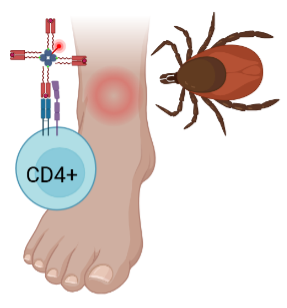
CD4+ T cell response to tickborne pathogens. Although the prevalence of tick-transmitted infections is rising in North America, the immunological features of these diseases are poorly understood. We are developing tools to track the antigen-specific CD4+ T cells that respond to rickettsial pathogens to understand how this unique mode of transmission shapes adaptive immunity.
Select Publications:
Becker SH, Ronayne CE, Bold TD, Jenkins MK. Antigen-specific CD4+ T cells promote monocyte recruitment and differentiation into glycolytic lung macrophages to control Mycobacterium tuberculosis. PLoS Pathog. 2025 Jun 9;21(6):e1013208. doi: 10.1371/journal.ppat.1013208.
Osum KC, Becker SH, Krueger PD, Mitchell JS, Hong SW, Magill IR, Jenkins MK. A minority of Th1 and Tfh effector cells express survival genes shared by memory cell progeny that require IL-7 or TCR signaling to persist. Cell Rep. 2025 Jan 28;44(1):115111. doi: 10.1016/j.celrep.2024.115111.
Patterson MT, Burrack AL, Xu Y, Hickok GH, Schmiechen ZC, Becker S, Cruz-Hinojoza E, Schrank PR, Kennedy AE, Firulyova MM, Miller EA, Zaitsev K, Williams JW, Stromnes IM. Tumor-specific CD4 T cells instruct monocyte fate in pancreatic ductal adenocarcinoma. Cell Rep. 2023 Jul 25;42(7):112732. doi: 10.1016/j.celrep.2023.112732.
Becker SH, Jastrab JB, Dhabaria A, Chaton CT, Rush JS, Korotkov KV, Ueberheide B, Darwin KH. The Mycobacterium tuberculosis Pup-proteasome system regulates nitrate metabolism through an essential protein quality control pathway. Proc Natl Acad Sci U S A. 2019 Feb 19;116(8):3202-3210. doi: 10.1073/pnas.1819468116.