

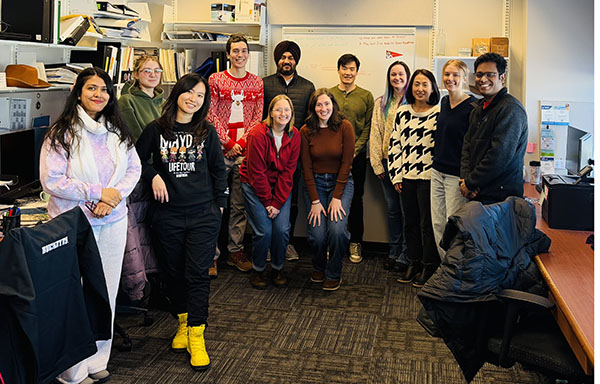
Research Interests:
Our laboratory works at the intersection of pharmacology and nephrology to develop innovative diagnostics and targeted therapies for kidney disease. We investigate the molecular mechanisms that regulate kidney tubular epithelial cell injury, repair, and function, with a particular focus on acute kidney injury (AKI), a common and life-threatening syndrome that currently lacks effective targeted therapies. Using molecular pharmacology, mouse genetics, and preclinical models of AKI, we investigate druggable signaling pathways that regulate tubular cell injury and survival, with the aim of developing novel small-molecule and biologic therapies.
A second major focus of our research is tubular secretory function, where we investigate how renal transporters regulate the elimination of uremic toxins and therapeutic drugs, how these pathways become disrupted in kidney disease, and how tubular secretion can be leveraged to develop sensitive biomarkers that detect kidney dysfunction before conventional measures of renal injury. Ultimately, our goal is to translate discoveries in tubular epithelial biology into improved diagnostics and therapies for patients with kidney disease. Our research is supported by grants from the National Institute of Diabetes and Digestive and Kidney Diseases (NIDDK), the American Heart Association (AHA), and the American Society of Nephrology (ASN).
Publications (selected):
1. Martinez SA, Karel IZ, Silvaroli JA, Ahmed E, Kim JY, Stayton A, Patel PS, Afjal MA, Horton T, Bohmer M, Vanichapol T, Sander V, Andrade GM, Allison CV, Mondal M, Thorson VC, Partey A, Nimkar K, Williams V, Quimby J, Ganesan L, Madhavan SM, Davidson AJ, Peterson BR, Adebiyi A, Rao R, Sweet DH, Singh P, Bennett KM, Zepeda-Orozco D, Mallipattu SK, Eisenmann ED, Sparreboom A, Rovin BH, Bajwa A and Pabla NS. Resazurin dye is an in vivo sensor of kidney tubular function. Kidney Int. 2025;107:508-520.
2. Kim JY, Bai Y, Jayne LA, Hector RD, Persaud AK, Ong SS, Rojesh S, Raj R, Feng M, Chung S, Cianciolo RE, Christman JW, Campbell MJ, Gardner DS, Baker SD, Sparreboom A, Govindarajan R, Singh H, Chen T, Poi M, Susztak K, Cobb SR and Pabla NS. A kinome-wide screen identifies a CDKL5-SOX9 regulatory axis in epithelial cell death and kidney injury. Nat Commun. 2020;11:1924.
3. Sprowl JA, Ong SS, Gibson AA, Hu S, Du G, Lin W, Li L, Bharill S, Ness RA, Stecula A, Offer SM, Diasio RB, Nies AT, Schwab M, Cavaletti G, Schlatter E, Ciarimboli G, Schellens JHM, Isacoff EY, Sali A, Chen T, Baker SD, Sparreboom A and Pabla N. A phosphotyrosine switch regulates organic cation transporters. Nat Commun. 2016;7:10880.
4. Pabla N, Gibson AA, Buege M, Ong SS, Li L, Hu S, Du G, Sprowl JA, Vasilyeva A, Janke LJ, Schlatter E, Chen T, Ciarimboli G and Sparreboom A. Mitigation of acute kidney injury by cell-cycle inhibitors that suppress both CDK4/6 and OCT2 functions. Proc Natl Acad Sci U S A. 2015;112:5231-6.
5. Pabla N, Dong G, Jiang M, Huang S, Kumar MV, Messing RO and Dong Z. Inhibition of PKCdelta reduces cisplatin-induced nephrotoxicity without blocking chemotherapeutic efficacy in mouse models of cancer. J Clin Invest. 2011;121:2709-22.
Contact:
Navjot Pabla, PhD
Professor of Medicine
Division of Nephrology & Hypertension
Department of Medicine
Renaissance School of Medicine
E-mail: Navjotsingh.pabla@stonybrookmedicine.edu