

 Appointment
Primary Appointment: Assistant Scientific Director, Community Outreach and Engagement,
Stony Brook Cancer Center
Office location: The Medical and Research Translation (MART) building
Level 8th Room: 8M-0826
Lauterbur Drive, Stony Brook, NY 11794-7282
Research Assistant Professor,
Department of Pathology
Renaissance School of Medicine
Stony Brook Cancer Center
Lauterbur Drive Stony Brook, NY 11794
Email: Chitra.Thakur@stonybrookmedicine.edu
Research Interests and Summary
My research centers on molecular oncology, with a particular emphasis on defining the genetic, epigenetic, and environmental determinants that govern cancer initiation, progression, and therapeutic response. I am especially interested in the interplay between cancer epigenetics, environmental carcinogenesis, and translational biomarker discovery in human cancers, with the goal of identifying actionable vulnerabilities that enable early detection and inhibit progression. A major focus of my work has been towards the investigation of the mineral dust-induced gene (mdig) and its role in lung and breast cancer development, progression, and metastasis. Using integrated genomic, epigenomic, and functional approaches coupled with preclinical mouse models and next-generation sequencing, we investigate how mdig shapes chromatin architecture and cellular plasticity that govern the growth, death, and metastatic propensity of cancer cells.
My work also extends to interdisciplinary efforts in examining the scientific basis and potential applications of lifestyle intervention modalities in cancer, with rigorous evaluation of molecular mechanisms and therapeutic efficacy. I am currently studying how mind-body interventions, including oncology-informed yoga and SMART (Stress Management and Resiliency Training), influence the quality of life and epigenetic alterations in cancer survivors. This effort integrates behavioral science with molecular profiling to understand how psychosocial well-being may shape biological pathways relevant to survivorship, resilience, and long-term health. Collectively, my research strives to bridge mechanistic molecular discoveries with clinical and behavioral applications, advancing truly holistic and personalized approaches to cancer care and survivorship.
Keywords: Cancer epigenetics, biomarker discovery, environmental carcinogenesis, preclinical mouse models, big data in translational research, complementary alternative medicine in cancer, cancer survivorship research, mineral dust induced gene (mdig) in cancer development and metastasis.
| Institution/ Location | Degree | Year |
|---|---|---|
| Massachusetts Institute of Technology, USA, Professional Education in Applied Data Science, | 2023 | |
| University of Wurzburg/ Max Planck Institute of Biochemistry, Germany | PhD | 2007-2012 |
| Department of Microbiology, Barkatullah University Bhopal, India | MS | 2004-2006 |
| Govt. Motilal Science College, Barkatullah University Bhopal, India | BS | 2004 |
| Year(s) | Institution/ Location |
|---|---|
| 05/2025 – present: | Assistant Scientific Director, Office of Community Outreach and Engagement, Stony Brook Cancer Center |
| 2022-present | Research Assistant Professor, Stony Brook Cancer Center, NY |
| 7/2021-12/2021 | Senior Research Scientist, Stony Brook Cancer Center, NY |
| 2019-2021 | Research Assistant Professor, Wayne State University, Detroit MI |
| 2017-2019 | Research Associate, Wayne State University, Detroit MI |
| 2012-2017 | Post-Doctoral Fellow, Wayne State University, Detroit MI |
| 2007-2012 | Graduate School of Life Sciences Fellow at the University of Wurzburg/Max Planck Institute of Biochemistry, Munich, Germany |
| 2006-2007 | Research Fellow, Evolutionary and Medical Genetics Laboratory, Center for Cellular and Molecular Biology, Hyderabad, India |
Awards and Honors
2025: Stony Brook Cancer Center Startup Funds
2024: American Cancer Society-Institutional Research Grant, Pilot Award
2023: Junior Scientist award for the best poster and oral abstract presentation at the Gloria & Mark
Snyder Symposium, Stony Brook Cancer Center, Stony Brook University
2021: Postdoctoral Service Award by Wayne State University
2019: Awarded the CORE INCENTIVE PROGRAM (CIP) funding on the project “Roles of mdig in breast
cancer tumorigenesis and metastasis.”
2017: Selected for the 2nd Annual NIH-Funded Boot Camp along with the Travel Award on "Big Data
Training for Translational Omics Research" Purdue University, West Lafayette, IN
2016: Outstanding poster award, Annual Research symposium at Wayne State University
2015: Outstanding poster award, Annual Research symposium at Wayne State University
2007: DFG German Excellence Initiative award for doctoral studies
Academic Services and Leadership Roles
2025 – Assistant Scientific Director, Office of Community Outreach and Engagement, Stony Brook Cancer Center.
2023 – Co-Director, Graduate Teaching Program, Stony Brook Medicine, Stony Brook University
2021 – Co-Spokesperson, Graduate Faculty Membership Task Force, Wayne State University
2019–2021 – Guest Speaker, Pharmacy Career Fair (PPR 4255), Wayne State University
2019 – Ex-Officio Advisory Member, Wayne State Post-Doctoral Association (WSU-PDA)
2018 – Chair, Wayne State Post-Doctoral Association (WSU-PDA)
2015–2017 – Vice President, Wayne State Post-Doctoral Association (WSU-PDA)
2015–2016 – Chair, Professional Development Committee, WSU-PDA
Professional Services
Editorial
Frontiers in Public Health (Special Issue-Topic Editor, February 2023-present)
Cancer and Clinical Oncology (2019-present)
MDPI Medicina (Special Issue Editor, year 2021)
Technology in Cancer Research & Treatment (2018, Special Issue Editor)
Scientific Journal Reviewer
Medicinal Research Reviews
Scientific Reports
WIREs Nanomedicine and Nano biotechnology
Colloids and Surfaces B: Biointerfaces
Molecules
Toxicology and Applied Pharmacology
Cancer and Clinical Oncology
Breast Cancer: Targets and Therapy
Current Biomarker Findings
Lung Cancer: Targets and Therapy
Oncotargets and Therapy
Journal of Toxicology and Environmental Health
Frontiers in Cell and Developmental Biology
Frontiers in Oncology
Publications
- Seyyedsalehi, M. S., M. Cani, Q. Wang, C. Thakur, U. Malapelle, C. Y. Kong, S. Novello and P. Boffetta (2026). "Lung cancer in women: current evidence and future research priorities." Lung Cancer 213: 108905.
- Thakur, C., U. Saran and F. Chen (2025). "Editorial: The impact of specific environmental exposures on breast, lung, and colon cancer: advancing public health strategies for enhanced outcomes." Frontiers in Public Health 13.
- Wang, Z., C. Thakur, Z. Bi, Y. Qiu, W. Zhang, H. Ji, A. K. Venkatesan, S. Cherukuri, K. J. Liu, J. D. Haley, X. Mao, J. Meliker and F. Chen (2025). "1,4-Dioxane Induces Epithelial-Mesenchymal Transition and Carcinogenesis in an Nrf2-Dependent Manner." Journal of Extracellular Vesicles 14(5): e70072.
- Zhang, W., Z. Wang, Y. Fu, C. Thakur, H. Ji, Z. Bi, Y. Qiu, M. Elangbam, J. Haley and F. Chen (2025). "Aryl Hydrocarbon Receptor (AHR) Suppresses Arsenic (As (3+))-Induced Malignant Transformation by Antagonizing TOX Expression." Int J Biol Sci 21(6): 2747-2761.
- Seno, A., Z. Bi, L. Polin, Z. Liu, Y. Qiu, W. Zhang, A. Pawar, C. Thakur, M. Seno, Z. Wang and F. Chen (2025). "Genome-wide mapping of arsenic-activated Nrf2 reveals metabolic and epigenetic reprogramming in induced pluripotent stem cells." Redox Biology 86: 103773.
- Ji, H., M. Elangbam, Y. Qiu, J. Bamrah, W. Zhang, A. Pawar, C. Thakur, F. Chen and Z. Wang (2025). "Arsenic disrupts H3K9me3 and H3K27me3 balance by biasing PRC2.1 and PRC2.2 activity via PALI1 inhibition in carcinogenesis." Int J Biol Sci 21(9): 4069-4080.
- Wang, Z., Z. Bi, J. Bamrah, Y. Qiu, W. Zhang, B. S. Almutairy, H. Ji, J. D. Haley, C. Thakur and F. Chen "Nrf2 Drives Epigenetic Reprogramming and Acts as the Master Regulator of KLF4 Expression and Activity in Arsenic-Induced Transformation." Advanced Science Adv. Sci. 12, no. 40 (2025): e00221.
- Ji, H., Z. Bi, A. S. Pawar, A. Seno, B. S. Almutairy, Y. Fu, Y. Qiu, W. Zhang, Z. Wang, C. Thakur, H. Cui, L. Yang and F. Chen (2024). "Genomic and epigenetic characterization of the arsenic-induced oncogenic microRNA-21." Environmental Pollution: 123396.
- Wang, Z., Thakur, C., Seno, A., Chen, F. (2024). Digging out MDIG from the mess of H3K9me3, OTX2 and MYC signaling in human cancers. International Journal of Biological Sciences, 20(3), 1090-1092.
- Thakur, C*., Y. Qiu, A. Pawar and F. Chen* (2023). "Epigenetic regulation of breast cancer metastasis." Cancer and Metastasis Reviews. (*corresponding author)
- Wang, Z., Y. Fu, A. Seno, Z. Bi, A. S. Pawar, H. Ji, B. S. Almutairy, Y. Qiu, W. Zhang, C. Thakur and F. Chen (2023). "Tumor suppressive activity of AHR in environmental arsenic-induced carcinogenesis." Toxicology and Applied Pharmacology 480: 116747.
- Fu, Y., Z. Bi, H. Ji, M. Elangbam, Q. Zhang, Y. Qiu, W. Zhang, C. Thakur and F. Chen (2023). "Disruption of the tumor suppressor-like activity of aryl hydrocarbon receptor by arsenic in epithelial cells and human lung cancer." International Journal of Biological Sciences 19(7): 1983-2001.
- Bi, Z., Y. Fu, P. Wadgaonkar, Y. Qiu, B. Almutairy, W. Zhang, A. Seno, C. Thakur and F. Chen (2022). "New Discoveries and Ambiguities of Nrf2 and ATF3 Signaling in Environmental Arsenic-Induced Carcinogenesis." Antioxidants 11(1): 77.
- Almutairy, B., Y. Fu, Z. Bi, W. Zhang, P. Wadgaonkar, Y. Qiu, C. Thakur and F. Chen (2022). "Arsenic activates STAT3 signaling during the transformation of the human bronchial epithelial cells." Toxicol Appl Pharmacol 436: 115884.
- Wadgaonkar, P., Z. Bi, J. Wan, Y. Fu, Q. Zhang, B. Almutairy, W. Zhang, Y. Qiu, C. Thakur, M. Hüttemann and F. Chen (2022). "Arsenic Activates the ER Stress-Associated Unfolded Protein Response via the Activating Transcription Factor 6 in Human Bronchial Epithelial Cells." Biomedicines 10(5).
- Fu, Y., Z. Bi, L. Li, P. Wadgaonkar, Y. Qiu, B. Almutairy, W. Zhang, A. Seno, C. Thakur and F. Chen (2022). "Metabolomic dynamics of the arsenic-transformed bronchial epithelial cells and the derived cancer stem-like cells." Int J Biol Sci 18(1): 301-314.
- Thakur, C*., N. J. Carruthers, Q. Zhang, L. Xu, Y. Fu, Z. Bi, Y. Qiu, W. Zhang, P. Wadgaonkar, B. Almutairy, C. Guo, P. M. Stemmer and F. Chen* (2022). "Depletion of Mdig Changes Proteomic Profiling in Triple Negative Breast Cancer Cells." Biomedicines 10(8): 2021. (*corresponding author)
- Thakur, C., Y. Qiu, Q. Zhang, N. J. Carruthers, M. Yu, Z. Bi, Y. Fu, P. Wadgaonkar, B. Almutairy, A. Seno, P. M. Stemmer and F. Chen (2022). "Deletion of mdig enhances H3K36me3 and metastatic potential of the triple negative breast cancer cells." iScience 25(10): 105057.
- Thakur, C*., Y. Qiu, Y. Fu, Z. Bi, W. Zhang, H. Ji and F. Chen* (2022). "Epigenetics and environment in breast cancer: New paradigms for anti-cancer therapies." Frontiers in Oncology 12. (*corresponding author)
- Svenson, D. W., C. J. Davidson, C. Thakur and S. E. Bowen (2022). "Acute exposure to abuse-like concentrations of toluene induces inflammation in mouse lungs and brain." Journal of Applied Toxicology 42(7): 1168-1177
- Qiu, Y., Z. Bi, Y. Fu, L. Li, P. Wadgaonkar, B. Almutairy, W. Zhang, C. Thakur and F. Chen (2021). "Profiling of histone H3 trimethylation and distinct epigenetic pattern of chromosome Y in the transformed bronchial epithelial cells induced by consecutive arsenic treatment." Genes & Diseases.
- Bi, Z., Q. Zhang, Y. Fu, A. Seno, P. Wadgaonkar, Y. Qiu, B. Almutairy, L. Xu, W. Zhang, C. Thakur and F. Chen (2021). "Cooperation between NRF2-mediated transcription and MDIG-dependent epigenetic modifications in arsenic-induced carcinogenesis and cancer stem cells." Semin Cancer Biol 76: 310-318.
- Shi, J., C. Thakur*, Y. Zhao, Y. Li, L. Nie, Q. Zhang, Z. Bi, Y. Fu, P. Wadgaonkar, B. Almutairy, L. Xu, W. Zhang, Y. Qiu, M. Rice, H. Cui and F. Chen* (2021). "Pathological and Prognostic Indications of the mdig Gene in Human Lung Cancer." Cell Physiol Biochem 55(S2): 13-28 (*corresponding author).
- Zhang, Q., P. Wadgaonkar, L. Xu, C. Thakur, Y. Fu, Z. Bi, Y. Qiu, B. Almutairy, W. Zhang, P. Stemmer and F. Chen (2021). "Environmentally-induced mdig contributes to the severity of COVID-19 through fostering expression of SARS-CoV-2 receptor NRPs and glycan metabolism." Theranostics 11(16): 7970-7983.
- Zhang, Q., Y. Fu, C. Thakur, Z. Bi, P. Wadgaonkar, Y. Qiu, L. Xu, M. Rice, W. Zhang, B. Almutairy and F. Chen (2020). "CRISPR-Cas9 gene editing causes alternative splicing of the targeting mRNA." Biochem Biophys Res Commun 528(1): 54-61.
- Bi, Z., Q. Zhang, Y. Fu, P. Wadgaonkar, W. Zhang, B. Almutairy, L. Xu, M. Rice, Y. Qiu, C. Thakur and F. Chen (2020). "Nrf2 and HIF1α converge to arsenic-induced metabolic reprogramming and the formation of the cancer stem-like cells." Theranostics 10(9): 4134-4149.
- Zhang, Q., C. Thakur, Y. Fu, Z. Bi, P. Wadgaonkar, L. Xu, Z. Liu, W. Liu, J. Wang, B. L. Kidder and F. Chen (2020). "Mdig promotes oncogenic gene expression through antagonizing repressive histone methylation markers." Theranostics 10(2): 602-614.
- Zhang, Q., C. Thakur, J. Shi, J. Sun, Y. Fu, P. Stemmer and F. Chen (2019). "New discoveries of mdig in the epigenetic regulation of cancers." Semin Cancer Biol 57: 27-35.
- Thakur, C. and F. Chen (2019). "Connections between metabolism and epigenetics in cancers." Semin Cancer Biol 57: 52-58.
- Li, L., Z. Bi, P. Wadgaonkar, Y. Lu, Q. Zhang, Y. Fu, C. Thakur, L. Wang and F. Chen (2019). "Metabolic and epigenetic reprogramming in the arsenic-induced cancer stem cells." Semin Cancer Biol 57: 10-18.
- Thakur, C*., U. R. Rapp and T. Rudel (2018). "Cysts mark the early stage of metastatic tumor development in non-small cell lung cancer." Oncotarget 9(5): 6518-6535 (*corresponding author).
- Thakur, C., B. Chen, L. Li, Q. Zhang, Z. Q. Yang and F. Chen (2018). "Loss of mdig expression enhances DNA and histone methylation and metastasis of aggressive breast cancer." Signal Transduct Target Ther 3: 25.
- Kumar, S. A., C. Thakur, L. Li, H. Cui and F. Chen (2017). "Pathological and prognostic role of mdig in pancreatic cancer." Genes Cancer 8(7-8): 650-658.
- Wu, K., L. Li, C. Thakur, Y. Lu, X. Zhang, Z. Yi and F. Chen (2016). "Proteomic Characterization of the World Trade Center dust-activated mdig and c-myc signaling circuit linked to multiple myeloma." Sci Rep 6: 36305.
- Thakur, C., M. Wolfarth, J. Sun, Y. Zhang, Y. Lu, L. Battelli, D. W. Porter and F. Chen (2015). "Oncoprotein mdig contributes to silica-induced pulmonary fibrosis by altering balance between Th17 and Treg T cells." Oncotarget 6(6): 3722-3736.
- Thakur, C. and F. Chen (2015). "Current understanding of mdig/MINA in human cancers." Genes Cancer 6(7-8): 288-302.
- Thakur, C., Y. Lu, J. Sun, M. Yu, B. Chen and F. Chen (2014). "Increased expression of mdig predicts poorer survival of the breast cancer patients." Gene 535(2): 218-224.
- Yu, M., J. Sun, C. Thakur, B. Chen, Y. Lu, H. Zhao and F. Chen (2014). "Paradoxical roles of mineral dust induced gene on cell proliferation and migration/invasion." PLoS One 9(2): e87998.
- Sun, J., M. Yu, Y. Lu, C. Thakur, B. Chen, P. Qiu, H. Zhao and F. Chen (2014). "Carcinogenic metalloid arsenic induces expression of mdig oncogene through JNK and STAT3 activation." Cancer Lett 346(2): 257-263.
- Li, L., P. Qiu, B. Chen, Y. Lu, K. Wu, C. Thakur, Q. Chang, J. Sun and F. Chen (2014). "Reactive oxygen species contribute to arsenic-induced EZH2 phosphorylation in human bronchial epithelial cells and lung cancer cells." Toxicol Appl Pharmacol 276(3): 165-170
- Chang, Q., B. Chen, C. Thakur, Y. Lu and F. Chen (2014). "Arsenic-induced sub-lethal stress reprograms human bronchial epithelial cells to CD61¯ cancer stem cells." Oncotarget 5(5): 1290-1303.
- Kopp, F., A. Hermawan, P. S. Oak, V. K. Ulaganathan, A. Herrmann, N. Elnikhely, C. Thakur, Z. Xiao, P. Knyazev, B. Ataseven, R. Savai, E. Wagner and A. Roidl (2014). "Sequential Salinomycin Treatment Results in Resistance Formation through Clonal Selection of Epithelial-Like Tumor Cells." Transl Oncol 7(6): 702-711
- Wu, K., Q. Chang, Y. Lu, P. Qiu, B. Chen, C. Thakur, J. Sun, L. Li, A. Kowluru and F. Chen (2013). "Gefitinib resistance resulted from STAT3-mediated Akt activation in lung cancer cells." Oncotarget 4(12): 2430-2438.
- Chen, B., M. Yu, Q. Chang, Y. Lu, C. Thakur, D. Ma, Z. Yi and F. Chen (2013). "Mdig de-represses H19 large intergenic non-coding RNA (lincRNA) by down-regulating H3K9me3 and heterochromatin." Oncotarget 4(9): 1427-1437.
- Ceteci, F., S. Ceteci, E. Zanucco, C. Thakur, M. Becker, N. El-Nikhely, L. Fink, W. Seeger, R. Savai and U. R. Rapp (2012). "E-cadherin controls bronchiolar progenitor cells and onset of preneoplastic lesions in mice." Neoplasia 14(12): 1164-1177.
- Oak, P. S., F. Kopp, C. Thakur, J. W. Ellwart, U. R. Rapp, A. Ullrich, E. Wagner, P. Knyazev and A. Roidl (2012). "Combinatorial treatment of mammospheres with trastuzumab and salinomycin efficiently targets HER2-positive cancer cells and cancer stem cells." Int J Cancer 131(12): 2808-2819.
- Ceteci, F., J. Xu, S. Ceteci, E. Zanucco, C. Thakur and U. R. Rapp (2011). "Conditional expression of oncogenic C-RAF in mouse pulmonary epithelial cells reveals differential tumorigenesis and induction of autophagy leading to tumor regression." Neoplasia 13(11): 1005-1018.
- Thakur, C* (2019). Chapter 2 - An Overview, Current Challenges of Drug Resistance, and Targeting Metastasis Associated With Lung Cancer. Nanotechnology-Based Targeted Drug Delivery Systems for Lung Cancer. P. Kesharwani, Academic Press: 21-38 (*corresponding author).
- Thakur, C* (2018). Chapter 2 - Angiogenesis in Brain Tumors. Nanotechnology-Based Targeted Drug Delivery Systems for Brain Tumors. P. Kesharwani and U. Gupta, Academic Press: 27-47 (*corresponding author).
- Chang, Q., Z. Bi, Y. Fu, M. K. A. Rice, Q. Zhang, P. Wadgaonkar, B. Almutairy, W. Zhang, Y. Lu, L. Xu, C. Thakur and F. Chen (2020). Characterization of Arsenic-Induced Cancer Stem-Like Cells. Stem Cell Transcriptional Networks: Methods and Protocols. B. L. Kidder. New York, NY, Springer US: 293-
- Oak, P. and C. Thakur (2024). Chapter 9 - Involvement of epigenetic modifications in cancer stem cells and chemoresistance. Cancer Epigenetics and Nanomedicine. P. Kesharwani and C. Thakur, Academic Press: 199-213.
- Saran, U. and C. Thakur (2024). Chapter 1 - Overview of cancer: Mechanisms of carcinogenesis. Cancer Epigenetics and Nanomedicine. P. Kesharwani and C. Thakur, Academic Press: 3-34.
- Thakur, C*. and U. Saran (2024). Chapter 12 - Dietary components as epigenetic modifiers and their roles in cancer prevention. Cancer Epigenetics and Nanomedicine. P. Kesharwani and C. Thakur, Academic Press: 255-276 (*corresponding author).
- Thakur, C*., Y. Qiu, Z. Bi, Z. Wang and F. Chen* (2024). MDIG in Breast Cancer Progression and Metastasis. Epigenetic Mechanisms in Breast Cancer Therapy and Resistance. S. Bhatnagar. Cham, Springer Nature Switzerland: 1-14 (*corresponding author).
Books
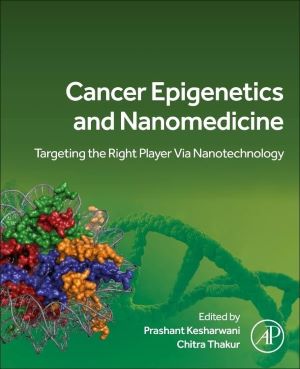
Cancer Epigenetics and Nanomedicine: Targeting the Right Player via Nanotechnology
Editors: Chitra Thakur, Prashant Kesharwani
Publisher: Elsevier
Paperback ISBN: 9780443132094, eBook ISBN: 9780443132100
Imprint: Academic Press
1st Edition – July 1st , 2024
PubMed My Bibliography
https://www.ncbi.nlm.nih.gov/myncbi/chitra.thakur.1/bibliography/public/
Google Scholar
https://scholar.google.co.in/citations?user=-MMW4LEAAAAJ&hl=en