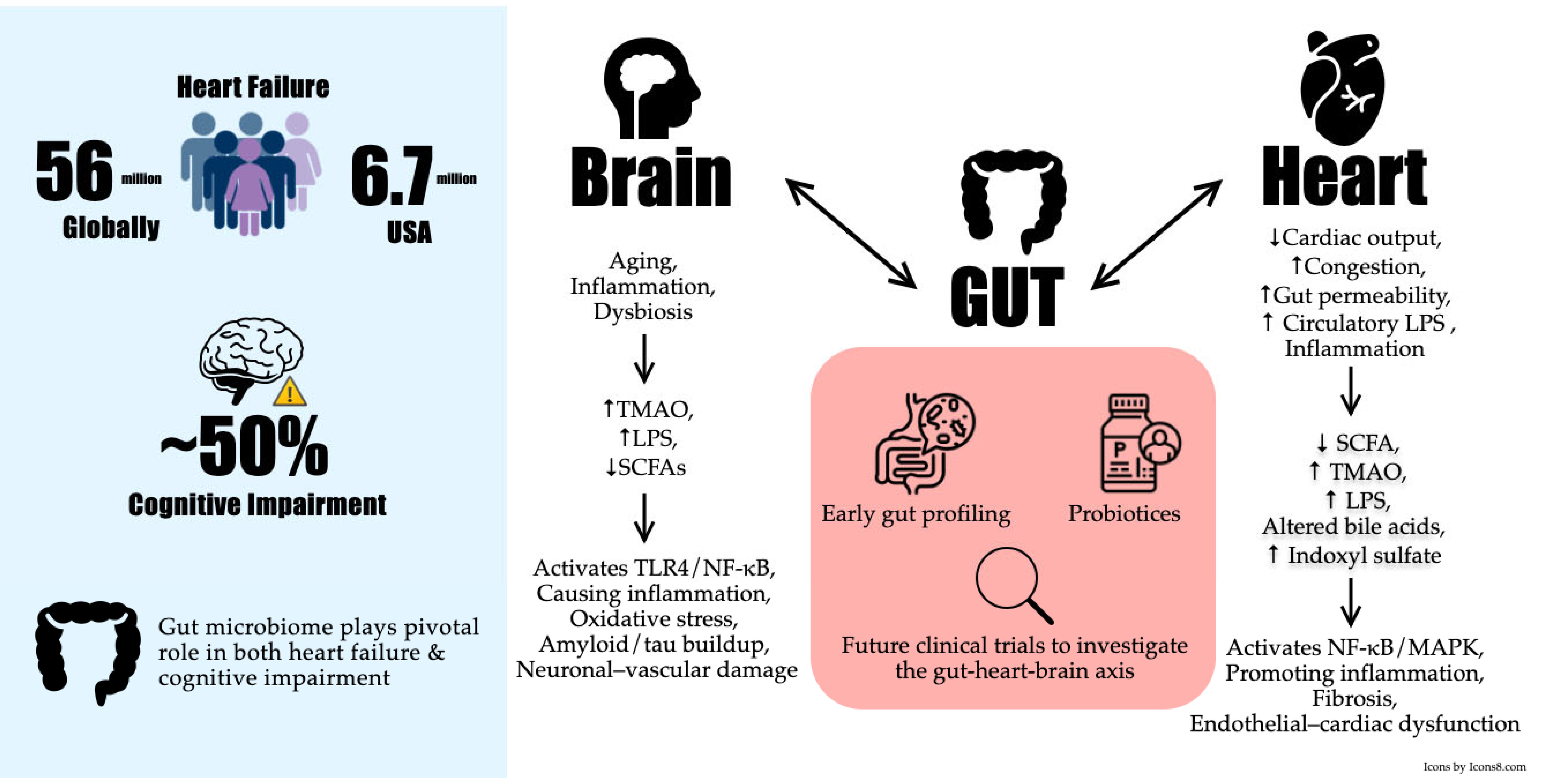
New research in the Journal of Personalized Medicine is an important collaboration between the Divisions of Cardiology and Gastroenterology and Hepatology in the Renaissance School of Medicine at Stony Brook University.
Heart failure (HF) affects over 55 million individuals globally, with prevalence projected to exceed 11 million in the United States by 2050 and is increasingly recognized as a systemic disorder extending beyond hemodynamic dysfunction to encompass profound alterations in neural and gut physiology. Cognitive impairment affects nearly half of HF patients and represents a major determinant of morbidity, self-care capacity, and mortality. Recent advances suggest that the gut microbiome serves as a pivotal intermediary in the heart–brain crosstalk, influencing neurocognitive outcomes through inflammatory, metabolic, and neurohumoral pathways.
This review article has been led by Dr. Ali Reza Rahmani, postdoctoral fellow in the Division of Cardiology.
Learn more:
"Heart Failure and Cognitive Impairment Through the Lens of the Gut Microbiome: A Narrative Review"
by Ali Reza Rahmani, Seyed Avid Madani, Ethan Aminov, Lasha Gogokhia, Travis Bench and Andreas Kalogeropoulos