

Dr. Lisa Strano-Paul joins newest class of AGS Fellows—an elite group of healthcare professionals committed to leading caring for older adults.
Lisa Strano-Paul M.D., Professor of Medicine, Associate Dean for Clinical Education, was recently inducted into the newest class of American Geriatrics Society (AGS) Fellows. AGS Fellows like Lisa Strano-Paul represent a distinguished cohort of geriatrics experts recognized for a deep commitment to advancing high-quality, person-centered care for all older adults.
“Advancing geriatrics education is one of the most meaningful investments we can make for the future of healthcare.” 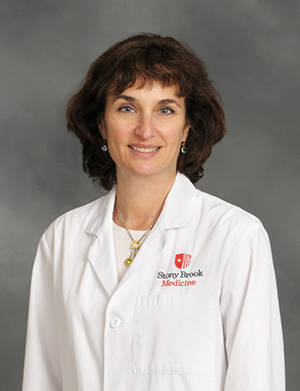
Each year, a small contingent of highly qualified AGS members earn fellowship status following a rigorous application process, which includes assessing everything from continuing education and public service to geriatrics scholarship and healthcare leadership. This year’s fellows hail from all four corners of the country and reflect the increasingly interprofessional nature of geriatrics as a field attracting influential physicians like Lisa Strano-Paul, a leading clinical educator and scholar who has assumed leadership roles in medical education at RSOM emphasizing the integration of geriatrics into core medical education and nationally as chair of the AGS Education committee.
Throughout her career as a physician-educator, Dr. Strano-Paul has been guided by a singular purpose: to foster the professional and personal growth of medical students and residents so that they may become compassionate, skilled, and reflective physicians. Her work as a clinician, educator, and scholar has been anchored in three interwoven commitments—innovation in medical education, advancing professional identity formation and geriatric education, and mentoring the next generation of physicians.
Her teaching philosophy is rooted in the belief that medical education must extend beyond the transmission of knowledge to the cultivation of humanism, professionalism, and resilience. As a practicing geriatrician for over three decades, she has brought the lived experiences of patient care directly into the classroom, encouraging learners to engage with geriatric medicine as both a science and a deeply human endeavor.
Vincent W. Yang, MD, PhD
SUNY Distinguished Professor
Simons Chair of Medicine
Professor of Medicine, Biomedical Informatics, and Physiology & Biophysics
Renaissance School of Medicine at Stony Brook University